


What do Football Queensland’s Annual Numbers mean for Australian Football?

Football Queensland has released its 2025 Annual Report, revealing record total revenue of $25.3 million, participation exceeding 296,000 and more than 94,000 female participants across the state, as the organisation positions itself for a decade of growth leading into the Brisbane 2032 Olympic and Paralympic Games.

The report, released following the Annual General Meeting on Friday May 22, documents a year in which Football Queensland recorded a pre-depreciation surplus of $306,599 while maintaining participant registration fees at their lowest level among all Australian member federations for the fifth consecutive year. A statutory deficit of $269,860 after depreciation was recorded following the recognition of a $295,953 impairment against a long-outstanding debt owed by Football Australia, a matter the board and executive indicated they would continue to pursue.

Total revenue grew from $23.9 million in 2024 to $25.3 million in 2025, driven by increases across registration income, community and advanced football programs, and other income streams. Commercial revenue declined slightly from $3.66 million to $3.36 million across the same period.

Growth on and off the field

The participation figures embedded in the report underscore the scale of the challenge and opportunity facing Queensland football. Women’s and girls’ participation reached 94,165 across all programs, with club-based women’s and girls’ participation growing to 37,946. Coles MiniRoos participation climbed seven percent to 46,448, with female MiniRoos participation up ten percent.

Girls United programs welcomed more than 3,500 participants across leagues, social sessions and carnivals statewide, while the Q-League Schools Competition has now delivered playing opportunities to close to 1,000 students since its inception. Walking Football continued to expand, with the 7th Annual QUT Walking Football Cup attracting 39 teams and more than 300 participants.

Digital engagement also reached new heights, with FQTV livestream views climbing to 2.47 million and women’s viewership surging 67 percent across the year, a figure that reflects the growing audience for female football at state competition level and points to the commercial opportunity the women’s game represents for Queensland football governance.

Coach registrations grew 22.9 percent, with Football Queensland delivering courses to close to 3,000 participants across the state including dedicated all-female Foundation of Football, C Diploma and B Diploma programs. Referee registrations grew 6.3 percent, supported by 170 courses delivered to more than 2,100 attendees and a landmark Memorandum of Understanding with three of Queensland’s leading school sport associations to strengthen referee development pathways.

The 2032 dimension

Perhaps the most consequential element of the 2025 report is Football Queensland’s progress on the Brisbane 2032 infrastructure agenda. The organisation submitted a comprehensive proposal to the Queensland Government’s 100-Day Olympic Infrastructure Review, advocating for a purpose-built Tier 2 rectangular stadium, upgrades to Perry Park and the establishment of a Queensland State Home of Community Football at Meakin Park.

The submission secured meaningful outcomes, with Queensland Government contributions toward Perry Park and a State Home of Community Football included in the government’s 2032 Delivery Plan. The infrastructure foundations being laid now will determine whether the Games leave a lasting legacy for football in Queensland or a missed opportunity.

CEO Robert Cavallucci said the year had been defined by investment in the structures that make participation possible.

“Our priority remained the delivery of accessible and inclusive participation opportunities for all Queenslanders as our community and social programs reached thousands of players in every corner of the state,” Cavallucci said.
Previous ArticleNext Article

Queensland Football Convention adds high-profile speakers to 2026 lineup

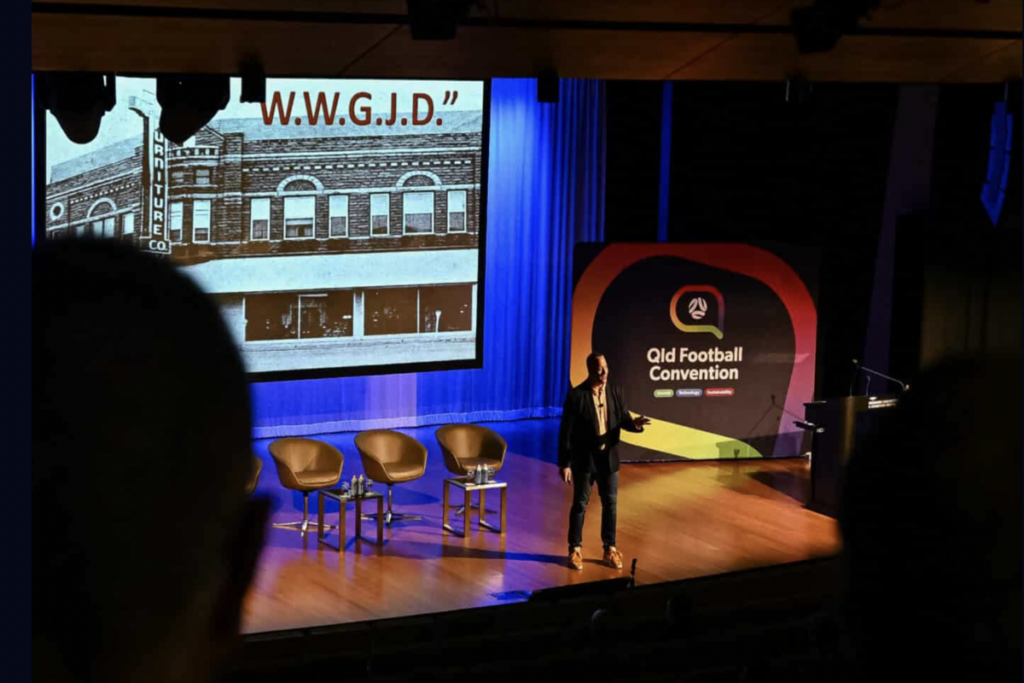
The 2026 Queensland Football Convention has expanded its speaker lineup. Robbie Kruse, Emma McKeon, Jon Moss and Tony Wilson are joining previously confirmed headliner Mark Bosnich. The four new additions will bring experience from football, elite sport, refereeing and high performance to the two-day convention at the Brisbane Convention & Exhibition Centre on the 10th and 11th of October.

Bosnich was announced in August as the event’s featured speaker. The former Socceroo and Premier League goalkeeper will take part in an exclusive Q&A covering his career, life in football and the pathways available to Australia’s next generation of players. Robbie Kruse adds another strong football voice to the program. Queensland’s most-capped Socceroo will share lessons from a career that took him from local football to the FIFA World Cup and UEFA Champions League. Now working in coaching and player development, Kruse will focus on pathways, talent development and the challenge of making the step into elite football.

McKeon – Australia’s most decorated Olympian – will bring a different perspective in exploring the principles behind high performance. Her session will cover teamwork, resilience, goal setting and the value of small improvements when competing at the highest level.

Former Premier League referee and current-Football Australia Head of Referees Jon Moss will also return, examining the relationship between coaches and match officials. He will focus on communication, mutual respect and collaboration, while also looking at the future of refereeing in Australia and the role coaches and clubs can play in supporting officials.

Tony Wilson, founder of Performance Lab, completes the newly announced group. As keynote speaker, Wilson will examine mindset, leadership, culture and resilience, drawing on his work with elite athletes, teams and organisations across Australia and the United States. The expanded program gives coaches, administrators and football professionals access to perspectives from across the sporting landscape.

The Queensland Football Convention will take place at the Brisbane Convention and Exhibition Centre. The convention takes place from the 9th to the 11th of October.

To purchase tickets to the 2026 Queensland Football Convention, click the link here.

Brazil is coming. But what is the real price of bringing football’s giants to Australia?

There is something undeniably exciting about Brazil coming to Australia. The five-time World Cup winners will face the Socceroos twice in Queensland from Friday, with Townsville and Brisbane set to host the blockbuster fixtures.

For Australian football, these are the kind of games that should be anticipated, celebrated and capture the public’s attention. But they also raise questions: how much should Australian football pay to bring the world’s biggest nations here, and when does the bill become too big? 

The cost of bringing the big names

Australia has always paid up to bring big names down under. Last week’s NFL game in Melbourne, at a cost of between $10 and 15 million dollars to the Victorian Government, is just the latest example.

It could cost the same amount to bring Brazil to Queensland. A report in The Sydney Morning Herald last year revealed Brazil was reportedly seeking around $7.5 million per match to play in Australia. The fee is in line with other major international events; Western Australia reportedly faced a bill of around $12 million in taxpayer funding for the recent Perth Italian Football Festival.

I’m worried Football Australia won’t get return on investment to make this particular event worthwhile. The enormous fee to bring Brazil to Australia can’t immediately be justified as an investment in our footballing future. Instead, Football Queensland and the state government could have put these funds into grassroots facilities. Part of Football Queensland’s scrapped state headquarters investment plan was to spend $8.5 million to refurbish fields, lights, drains and irrigation at Mappas and Meakin parks. Instead of these plans to invest in the state’s youth players and academies, money has been spent on two international friendlies.

So ahead of the fixtures, the question remains: will these games inspire the future generation, and will participation grow? The NFL match was impossible to ignore: a sold-out MCG and a live audience of 2.1 million on free-to-air, not even including those watching on ESPN and Netflix. Football Australia is not simply buying 90 minutes of football; it is buying the attention that comes with Brazil. So let’s see if they can maximize returns. 

Ticketing Tells a Story

Ticket sales provide insight into the interest in the fixture. Brisbane has sold much quicker than Townsville, but neither have sold out as yet. The fact these games didn’t immediately sell out may be considered surprising as there is a genuine appetite in Australia for elite international football at the moment, evidenced by SBS’ World Cup viewership numbers of 17.1 million.

Brazil is bringing some of its brightest stars: Vinicius Junior, Raphinha, Bruno Guimaraes, Marquinhos and Endrick are among the headline names in their squad. The star power is there. So why haven’t these matches sold out? There’s a chance it comes down to the competition and the visibility of the event.

The viewing problem

The timing of this fixture could raise eyebrows amongst fans. As much as Australia and Brazil will draw huge crowds, both games fall on either side of the AFL Grand Final. The 2024 AFL Grand Final, which involved Queensland’s Brisbane Lions, drew over 4 million viewers on free-to-air. Brisbane, who have won the last two premierships, will feature once again on Grand Final day. Therefore, fans who could’ve attended may instead be making the trip to Melbourne.

Then comes the strangest part: one of the fixtures Australia will play will not even be available on free-to-air television. The Townsville match will be shown free on Network 10 and 10 Streaming, as well as Paramount+. The Brisbane match, however, will be available exclusively on Paramount+. That creates a disconnect. If governments and football administrators are spending millions to bring a global sporting brand to Australia, why should a large section of the Australian public need a subscription to watch the second match?

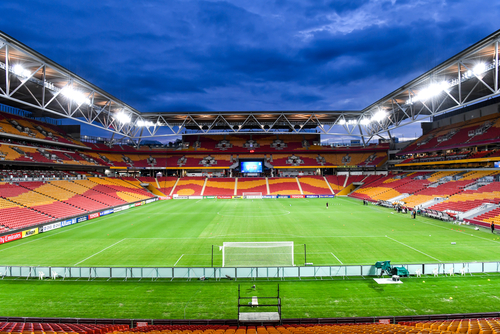
The Brisbane game is behind a paywall, limiting the national reach of the event. Reach is surely part of the justification for spending big on Brazil, it’s not just that 50,000 people get to sit inside Suncorp Stadium. It is that millions of Australians get exposed to the spectacle and if that audience is restricted, the value of this fixture is limited.

A solution could be to spend the money on advertising the match to the public to try to generate interest across streaming and free-to-air. With less than a week until the first game I don’t believe the advertising has done enough to generate enough interest to justify a $15 million price tag for the two game series. 

The Brazil friendlies will be spectacular. They should attract big crowds, create memories and give the Socceroos an excellent test against one of football’s most recognisable nations. But for the appropriate return, attention must be measured. Does this fixture carry on the Socceroos hype and keep the eyeballs of the general public on our sport? I’m not convinced. However, if these matches bring new fans to football, strengthen the national team and create lasting investment in the sport, the enormous price tag could still be justified. But if they simply produce two nights of football before the attention disappears, then Australian football has paid a premium for a very expensive show.

Most Popular Topics

Editor Picks

Send this to a friend