

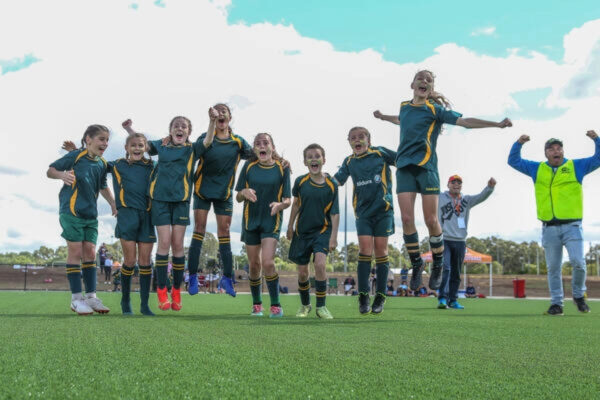


State federations welcome Women’s World Cup decision

Australia’s state federations have celebrated the nation’s successful bid for the 2023 FIFA Women’s World Cup, as the joint bid with New Zealand was chosen.

Australia’s state federations have celebrated the nation’s successful bid for the 2023 FIFA Women’s World Cup.

The respective football federations of New South Wales, Victoria, South Australia, Northern Territory, Tasmania, West and Australian Capital Territory have all congratulated Football Federation Australia on its winning bid.

The state federations believe that the World Cup will have positive impacts on football in Australia, such as assisting with the development of the women’s game as well as an increase in participants.

On the day of the announcement, Football NSW CEO Stuart Hodge said that it was a great day for football in NSW and Australia.

“The tournament will be a catalyst for the further development of women’s football in NSW and Australia, creating a profound and enduring legacy for the women’s game,” he said.

“The FIFA Women’s World Cup is the pinnacle for any female footballer to play and we look forward to welcoming the best teams from across the globe as well as the best players participating in our backyard along with our Matildas.

“Hosting the FIFA Women’s World Cup will provide us all with a great opportunity to accelerate the growth of women’s football and increase investment into football facilities, particularly those that are female friendly.”

Football Tasmania CEO Matt Bulkeley said that the Matildas are an inspiration to young girls and boys.

“27 per cent of all Tasmanian football players are female, meaning Tasmania already has one of the highest levels of female participation in the country, he said.

“Our short-term goal is to see female participation rise to 30 per cent of our total registration base and having the FIFA Women’s World Cup played in Australia will go a long way to helping achieve this.

“No matter where it’s held, every four years we see a great spike in new girls signing up to play football off the back of Women’s World Cup. We’re optimistic that following this exciting announcement, female football in Tasmania will see an even bigger spike in participation than usual.”

At a FIFA Council meeting on Friday morning, it was announced that Australia and New Zealand would be hosting the World Cup. They received 22 votes while Colombia received 13.


Previous ArticleNext Article

Female Referee Mentor Program backed by Football Australia

Football Australia (FA) launched the program last week, aiming to champion the next generation of female referees through connections with experienced officials.

Investing in the future

Backed with investment from the Australian Government’s ‘Play Our Way’ grant, FA’s Ref Our Game framework will pair future referees with current and former A-League officials.

Through one-on-one mentorship, development opportunities and a network of experienced professionals, aspiring female referees will have unique insights into match officiating.

“Football Australia has always been a leader in inclusion, setting a global standard for female leadership and development,” said Football Australia CEO, Martin Kugeler, via press release.

“This program reflects a strong commitment to building a more inclusive and sustainable officiating pathway and creating a meaningful connections, increasing confidence and ensuring talented female referees feel supported to stay in the game.”

Furthermore, with the launch coinciding with Female Football Week (running from May 8 to May 18), the program represents a wider drive in Australia’s football landscape to become inclusive and supportive.


About the program

Focused on future referees within the 18-26 age bracket, the program will give participants a deep understanding of match officiating and equip them with both confidence and expertise.

Each participant will benefit from six mentor sessions, which will include individual feedback, guidance and insights into the life of a referee in elite sport.

Combining leadership, communication and a real sense of belonging, the program promises to nurture new female referees and, as a result, ensure football remains a sport in which men and women can participate side-by-side.

“The Albanese Government’s $200 million Play Our Way program is the most significant commitment ever to women and girls sporting programs and facilities and it’s making a real difference,” explained Minister for Sport, Anika Wells.

“We want to see more girls and women involved in sport at every level and supporting programs like this helps make that happen.”

Indeed, programs of this nature align ambition, professional networks, and a vision for improving the landscape.

This is what the industry needs to ensure long-term inclusivity and cohesion for the next generation.

Football NNSW Releases Infrastructure Strategies as Participation Growth Outpaces Facilities

Northern NSW Football has unveiled bespoke infrastructure strategies for each of its seven member zones, providing an evidence-based roadmap for facility investment across the region as continued participation growth exposes critical gaps in the sporting infrastructure available to support it.

The Member Zone Infrastructure Strategies draw on data across participation rates, population growth and existing facility conditions to map what each zone has, what it needs and where investment will have the greatest impact. Identified gaps include drainage, lighting and inclusive changerooms – the foundational infrastructure that determines whether facilities are functional, safe and accessible year-round.

NNSWF Government Relations Manager Gary Fisher said the strategies represented a significant step toward smarter, more targeted investment across the region.

“By bringing together key data on participation, population growth and existing infrastructure, these strategies give us a stronger understanding of where the needs are greatest and where investment will have the most impact,” Fisher said. “Ultimately we want to create more inclusive and accessible environments for everyone involved in the game while building stronger, more sustainable clubs and communities for the future.”

Northern NSW Football has previously noted that participation across the region is at record levels and still rising, with women’s and girls’ football a significant driver of that growth. Infrastructure that was built for a smaller and less diverse participation base is increasingly unable to meet current demand, let alone accommodate future growth.

The strategies are also designed to strengthen NNSWF’s alignment with government funding priorities, providing the evidence base needed to support grant applications and long-term facility planning across all seven zones.

Most Popular Topics

Editor Picks

Send this to a friend