


Global Experts Strengthen 2025 Queensland Football Convention Line-up

With less than two weeks to go until the 2025 Queensland Football Convention, Football Queensland has announced the addition of several world-class experts to this year’s program.

Among the latest speakers are leading sports researcher and Athlete Assessments CEO Liz Masen, Olympic gold medal-winning coach Dean Boxall, and representatives from globally renowned football advisory group Double Pass — Stig Meyleman (Partner) and Sander Van Praet (Global Projects Lead).

Together, they bring a wealth of experience in leadership, elite coaching, and player development, adding significant depth to the Convention’s agenda.

Their sessions will focus on high-performance coaching, leadership frameworks, and internationally benchmarked development pathways that can be implemented within clubs and organisations across Queensland.

Attendees will gain valuable insights into the habits, systems, and cultures that drive success in high-performing teams.

About the Speakers

Liz Masen has over 30 years’ experience across professional sport, high-performance organisations, and investment banking. As CEO of Athlete Assessments and a PhD researcher in behavioural science and coaching, Liz has delivered workshops internationally, including for WeCOACH NCAA Women Coaches Academies and the Japanese Women Leaders and Coaches Academy. Her research into the coach–playmaker relationship across six team sports offers unique, practical insights into leadership, team dynamics, and building high-performing teams.

Dean Boxall is an Olympic gold-winning swimming coach renowned for his ability to develop elite athletes, including Olympic gold medallist Ariarne Titmus. Known for combining technical expertise with a focus on mindset and performance under pressure, Dean provides practical lessons in leadership, preparation, and high-performance coaching that translate beyond the pool.

Double Pass is a globally recognised football advisory company with over 20 years’ experience in league quality assurance and club development. With a team of more than 75 experts, Double Pass has partnered with FIFA, the English Premier League, the Bundesliga, and the Italian Football Federation. In 2024, Double Pass conducted an audit of the FQ Academy, working closely with Football Queensland to benchmark and enhance the system. The group continues to work with FQ, supporting in the delivery of our development pathways and frameworks, ensuring they are designed to strengthen clubs, develop players, and ensure sustainable growth across Queensland football.

FQ CEO Robert Cavallucci spoke with excitement about the additional speakers to the Convention.

“Bringing Liz, Dean, and Double Pass into the program strengthens this year’s Convention in a very practical way. Their experience spans elite international sport and high-performance leadership, and they are uniquely positioned to share insights that clubs and coaches can apply immediately. This is about giving our community the tools and frameworks to drive performance, growth, and long-term success,” Cavallucci said in a press release.

“The addition of these speakers highlights our commitment to ensuring our football community benefits from the best international practices and proven strategies, as the sessions provide our attendees with clarity and direction on how to elevate their teams, their clubs, and their overall sporting programs.”

The inclusion of these leading figures further strengthens the 2025 Queensland Football Convention as one of the nation’s premier gatherings for football professionals, coaches, and administrators.

Soccerscene is the official media partner of the Convention and we look forward to showcasing an event that will continue to shape the future of Australian football.

To purchase tickets to the event on the 25th-26th October, click HERE 
Previous ArticleNext Article

Europe Is Packing Out Stadiums – Is Australia Missing the Bigger Picture?

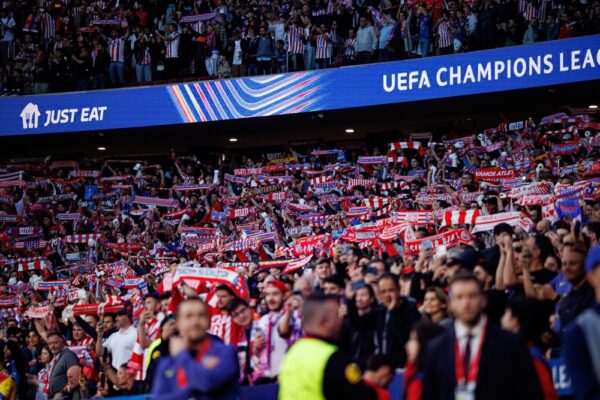
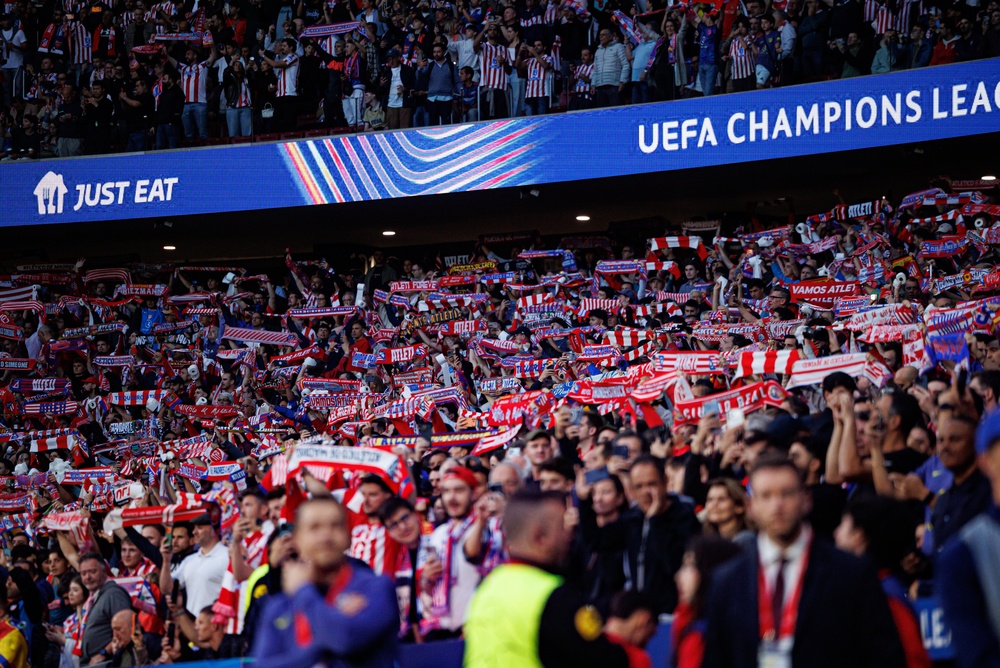
More than 60 million fans attended matches across Europe’s five major domestic leagues during the 2025/26 season, with average attendances rising 2.4 per cent to 34,402 spectators per game.

On the surface, the figures paint a picture of a healthy ecosystem. Stadiums are fuller than ever, supporters continue to attend in large numbers and live football remains one of the most compelling entertainment products in the world.

But headline crowd figures only tell part of the story.

The more revealing measure is stadium utilisation how much of a venue’s capacity is actually being filled and the structural factors influencing those numbers.

For clubs, higher attendances don’t simply mean more ticket sales. Every additional supporter creates revenue opportunities across hospitality, food and beverage, merchandise and memberships. Modern stadiums are increasingly designed to maximise revenue per visitor, making infrastructure investment as much a commercial decision as a football one.

Attendance growth needs context

In Germany, the Bundesliga reclaimed its position as Europe’s best-attended league, averaging more than 42,300 spectators per match following a 9.4 per cent increase on last year’s figures.

However, much of that growth was driven by the return of traditional powerhouses Hamburger SV and 1. FC Köln. Both clubs continued to attract crowds of more than 50,000 despite spending recent seasons in the second division.

Their promotion didn’t suddenly create new supporters.

It returned two of German football’s biggest fan bases to the top flight, demonstrating how promotion and relegation can significantly influence league-wide attendance trends.

Everton shows how new stadiums can unlock demand

While the Premier League recorded another increase in average attendance, much of that growth can be traced to Everton’s move into the new Hill Dickinson Stadium. The larger venue added almost 13,000 spectators per home match compared with Goodison Park, accounting for more than half of the league’s overall attendance growth during the season.

Rather than generating new demand, the project unlocked demand that already existed.

That distinction matters.

Attendance should be viewed alongside stadium utilisation because many clubs have effectively reached capacity.

A stadium averaging 98 per cent capacity tells a very different story to one averaging 60 per cent, even if the latter attracts more spectators overall.

High utilisation suggests strong demand, pricing power and a compelling matchday experience, while lower utilisation can indicate untapped potential or a venue unfit for its market.

Capacity is becoming a strategic issue

In competitions where grounds are regularly close to full, future growth will depend less on attracting new supporters and more on expanding or redeveloping stadiums.

Elsewhere, the opportunity lies in making better use of existing capacity.

Spain illustrates how infrastructure can also temporarily suppress attendances. Barcelona’s continued absence from the Spotify Camp Nou during its redevelopment has limited crowd numbers despite strong demand.

Real Madrid’s renovated Santiago Bernabéu, meanwhile, demonstrates how modern stadium investment can increase not only capacity but also commercial revenue through premium hospitality.

League structures also shape attendance trends

Ligue 1’s growth over recent seasons has coincided with its reduction from 20 clubs to 18, concentrating a greater number of well-supported clubs within the competition and lifting average attendances as a result.

Stadium investment, league composition, promotion and relegation, and long-term supporter culture all play a role.

Taken together, the figures suggest that attendance growth is rarely driven by a single factor.

The lesson for Australian football

Crowd figures are often viewed as the primary indicator of a league’s health, but European football demonstrates that context matters just as much as the headline number.

The recent Australia Cup fixture between South Melbourne and Preston Lions provides a good local example. While the official attendance was 6,673, the packed grandstands, active supporter groups and television presentation created an atmosphere that felt far larger than the raw figure suggested.

It was a reminder that fan engagement, venue utilisation and matchday experience can often say more about the health of a competition than attendance alone.

A sold-out 15,000-seat stadium may indicate stronger demand than a half-full 30,000-seat venue, while investment in infrastructure can unlock thousands of additional supporters without changing underlying interest in the game itself.

As clubs continue to invest in new stadiums and redevelop existing venues, attendance should increasingly be measured not simply by how many people are watching, but by how effectively football is meeting supporter demand.

The crowds may be rising, but the real story is why.

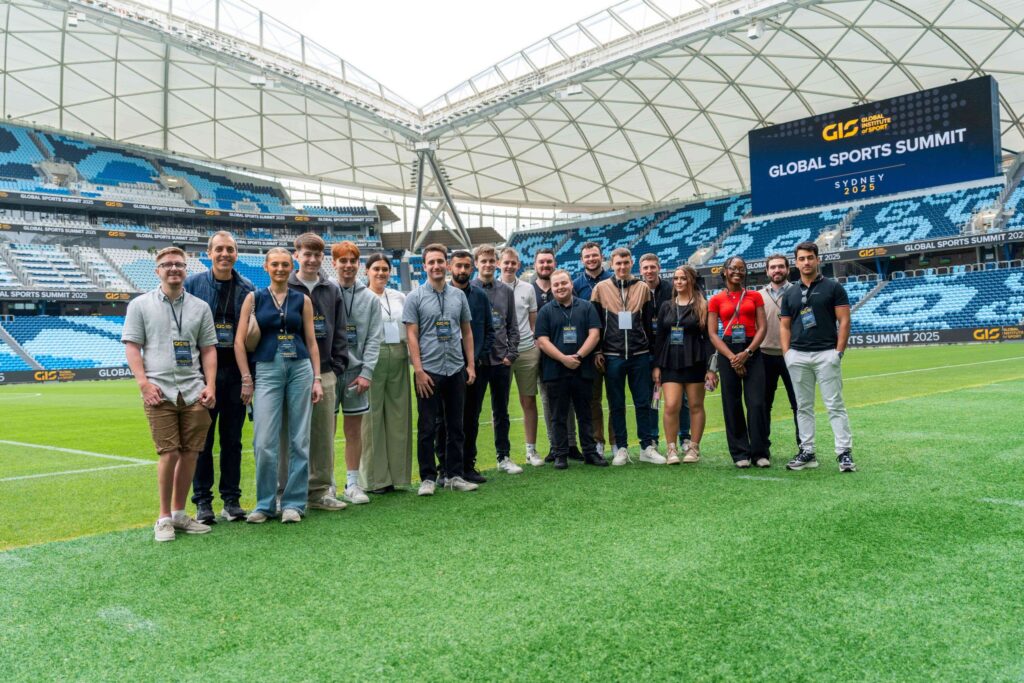
From Classroom to Global Football: GIS Opens New Career Path

The Global Institute of Sport (GIS) has opened new opportunities for students who want to build careers in football. GIS has partnered with the World Football Summit (WFS). The partnership offers two exclusive scholarship and internship opportunities.

Students can gain practical experience while studying. They can also build industry contacts and learn how the global football business works.

Two Football Industry Roles

The first opportunity focuses on partnerships and commercial development. Students in the Partnership Executive Intern role will support WFS commercial activity. They will learn how football organisations build and manage partnerships.

The second role focuses on clubs, leagues and federations. The Club, League & Federation Relations Intern will support WFS relationships with football organisations. This includes key stakeholders inside football.

Both roles give students direct exposure to the business side of the sport.

International Experience

The placements also offer flexibility. Full-time students can complete a six-month internship or placement. WFS will tailor the experience to each student’s profile and availability.

Part-time students can complete two six-month placements. This gives them exposure to different areas of the WFS business. Students may work remotely or at the WFS headquarters in Madrid. The final setup will depend on the student and WFS requirements.

A Global Football Network

WFS has built a major international football network since its launch in 2016. The organisation has hosted events across 11 countries. More than 44,600 people have attended its events. Its network now includes more than 153,000 football industry professionals.

WFS events have also featured major football figures. These include FIFA President Gianni Infantino, Ronaldo Nazário, Rio Ferdinand, Didier Drogba and Javier Tebas. The partnership gives GIS students access to this wider football ecosystem. It also connects academic study with real industry work.

Applications Open for 2026

Applications opened on 18 August 2026. New and existing GIS students can apply. The deadline is 14 September 2026.

For students targeting careers in football business, the opportunities offer a direct route into the industry. They can develop commercial skills and can build professional networks. They can also gain experience with the relationships that drive modern football.

To learn more about the GIS scholarship program click the link here.

Most Popular Topics

Editor Picks

Send this to a friend