


Northern NSW Football Calls in SAPA as Participation Surge Sparks Big Plans

Northern NSW Football has commissioned Sports Advisory Partners Australia to lead the development of its 2027 to 2029 Strategic Plan, a process that will shape the direction of one of Australia’s most significant regional football markets at a moment when the game nationally is navigating unprecedented growth and structural complexity.

The engagement, announced this week, will see SAPA conduct extensive consultation across NNSWF’s registered participants, member zones, standing committees, board of directors and executive leadership before delivering a final plan scheduled for release in September. The firm brings to the project a track record that spans Football Australia, the A-Leagues, AFL, Rugby Australia, Golf Australia and the Oceania Football Confederation.

NNSWF CEO Peter Haynes said the organisation intended to be deliberate and ambitious about what the next plan would ask of the sport in the region.

“This plan will do more than that,” Haynes said. “It will play a critical role in shaping the future of football in our region. We are going to be bold, ambitious and take this opportunity to really push our sport forward to reach its potential.”


Building on a period of significant growth

NNSWF’s current 2024 to 2026 Strategic Plan has already delivered measurable outcomes across participation, competition strength and community engagement, and has done so against a national backdrop that has made the job of growing football both easier and more demanding simultaneously.

The 2023 FIFA Women’s World Cup and the recent AFC Women’s Asian Cup in Australia have driven participation surges that are being felt at the regional level as acutely as anywhere. Northern NSW, which covers a vast and diverse geographic footprint from the Hunter Valley to the Queensland border, has seen women’s and girls’ football registrations climb sharply, reflecting a trend Haynes flagged publicly during Football Australia’s recent push for a $343 million NSW grassroots infrastructure fund, in which he noted that participation across the region was at record levels and still rising.

That growth creates a specific strategic challenge. Momentum is relatively easy to generate in the wake of a major tournament. Sustaining it across a three-year planning horizon, through the inevitable post-event cooling of public attention, against ongoing pressure on club volunteers and community facilities, and in competition with other codes for government funding and ground access, requires a more deliberately constructed framework than goodwill alone can provide.

The 2027 to 2029 plan will need to answer questions that the current plan did not have to confront at the same scale: how to absorb participation growth without degrading the quality of the experience for existing players, how to build the referee and coaching pipelines that expanding competitions demand, and how to make the case for infrastructure investment in regional communities where football’s political leverage is real but not unlimited.


The Regional Dimension

Regional football in Australia occupies a structurally distinct position within the national game. It sits outside the metropolitan NPL systems that tend to attract most of the administrative attention and commercial investment, and serves communities where football is often the largest club-based sport and where the absence of adequate pathways has historically meant talented players relocating or disengaging entirely.

NNSWF’s decision to invest in a professionally developed strategic plan, rather than producing one internally, signals an awareness that the next phase of growth requires external rigour and benchmarking against what is working elsewhere. SAPA’s familiarity with the organisation, cited by Haynes as a factor in the appointment, also suggests a desire for continuity of thinking rather than a wholesale strategic reset.

SAPA Executive Director Sam Chadwick said the firm was focused on producing something actionable rather than aspirational.

“Our goal is to deliver a clear and actionable strategy that will guide continued growth and long-term success for the game,” Chadwick said. “Northern NSW Football has built a strong platform through its 2024 to 2026 Strategic Plan and we are delighted to support the next phase of its journey.”

Community at its Centre

NNSWF Chairman Mike Parsons emphasised that the process would be driven by community voice rather than imposed from above, a commitment that carries practical as well as symbolic weight in a region where the diversity of football communities, from coastal clubs to inland associations, means that a single strategic framework must accommodate significantly different local realities.

“This will be a strategy for the entire football community and it is vital that we hear from as many voices as possible,” Parsons said. “Through genuine consultation and collaboration we will ensure the next strategic plan reflects the needs and aspirations of our community while positioning our game for continued success.”

Consultation opportunities will roll out across the coming months. The 2027 to 2029 Strategic Plan is scheduled for release in September.
Previous ArticleNext Article

Futsal receives major boost in NSW through new partnership

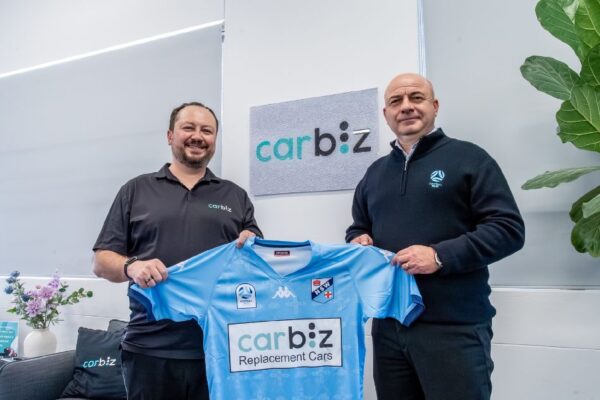
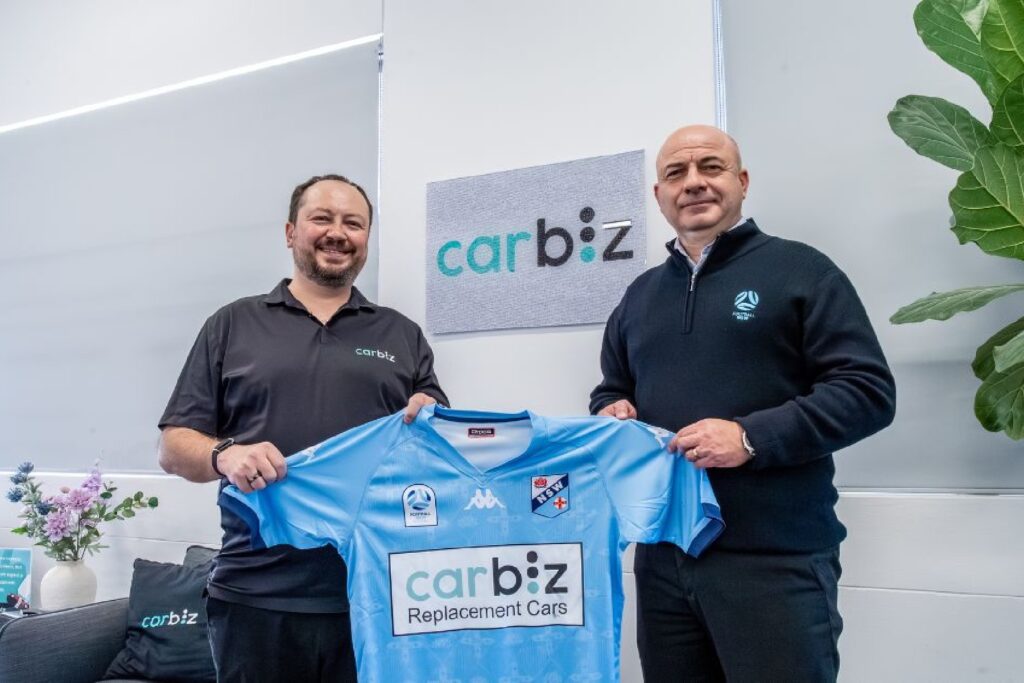
Carbiz will become the new Naming Rights Partner of Football NSW‘s premier futsal competitions in a deal set to run for two years.


Committed to growth

From its beginnings as a second-hand car dealership in 2016, Carbiz has seen incredible growth over the past decade. It now operates as Australia’s leading replacement car provider with over 12 branches, 200 staff and 500 partnerships.

No strangers to progress, hard work and community support, the Carbiz family is now aligning itself with one of Australia’s fastest-growing sports. Through this partnership, Carbiz will support the continued rise of futsal across New South Wales and the broader Australian football landscape.

“This is a fantastic partnership for Football NSW and for futsal in our state,” said Football NSW CEO, John Tsatsimas, via press release.

“Carbiz is a brand built on service, resilience and community values, which strongly aligns with our own vision for football and fustal in New South Wales.”

In 2022, futsal participants across Australia reached 58,453 – an 8% increase on the previous year. In 2025, however, this number rose to 63,425. Numbers in NSW also saw growth in this period, increasing from 4,682 to 5,230.

So with the highly-regarded and community-driven Carbiz backing the game’s development in NSW, futsal will launch into an exciting future.


Community connection

Competition and the desire to win are key aspects of any game – especially football.

But at the heart of the grassroots game is a fundamental wish to unite the local community. Thus, finding partners who understand this commitment – and are eager to match it – is so essential.

Furthermore, Carbiz CEO, Alex Rodov, outlined why the company aligns so well with Football NSW’s futsal future.

“At Carbiz, we’ve always believed that strong communities are built through connection, opportunity and teamwork.”

“Sport plays a vital role in bringing people together, and futsal is one of the fastest growing and most exciting forms of the game.”

“As a proudly Australian owned business, we’re excited to support a competition that creates opportunities for young athletes, strengthens local communities and inspires the next generation.”

The agreements will see the newly-named Carbiz Futsal Premier League and Carbiz Futsal Premier League 2 become key environments which support talent development, local participation and engagement with futsal as a whole.

Two Mid North Coast Football Clubs Secure NSW Government Infrastructure Grants

Penrith

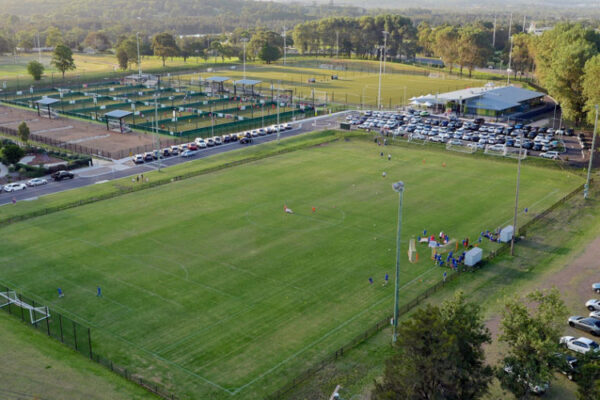
Great Lakes United and Gloucester SC have been awarded a near combined $340,000 in NSW Government infrastructure funding, with the grants addressing two of the most persistent and practical barriers to football participation in regional communities: poor drainage and inadequate facilities.

The funding comes through the NSW Government’s ClubGrants Category 3 Infrastructure Program, which drew 424 applications in this round and approved 22 projects. The program is designed to fund construction, renovation and fit-out of community infrastructure for disadvantaged NSW communities, including regional and remote areas, culturally and linguistically diverse communities, and people with disability. Both successful football clubs fall under the Football Mid North Coast zone, administered by Northern NSW Football.

Gloucester SC received $254,603 to construct all-abilities toilets, showers and referee facilities. Great Lakes United secured $84,200 for drainage installation at Boronia Park Sports Complex, a project aimed at reducing weather-related disruptions and improving field usability across the season.

Infrastructure gaps that are holding the game back

Football is the largest participation sport in NSW, with close to 300,000 registered players using approximately 1,000 sites and 2,250 playing fields every week, yet the facilities supporting that participation aren’t built to handle the scale or diversity of the game as it exists today.

Northern NSW Football’s own assessment of the problem is frank. The federation has previously identified drainage, lighting and inclusive changerooms as the foundational infrastructure gaps most likely to determine whether facilities are functional, safe and accessible year-round.

Female football participation in NSW has grown by 26% since 2014, placing particular pressure on clubs whose amenities were not designed with women and girls in mind. Gloucester SC’s all-abilities toilet and shower block, while framed as an accessibility upgrade, carries that broader implication: facilities built for a narrower participation base are increasingly inadequate for the game being played in them.

NNSWF Government Relations Manager Gary Fisher said the outcomes reflected the kind of community-driven football the federation exists to support. “Great Lakes United and Gloucester SC are wonderful examples of community football driven by dedicated volunteers, passionate families and strong local spirit,” Fisher said. “This funding will make a meaningful difference in helping both clubs continue to grow and provide positive experiences for players of all ages and abilities.”

A federation building its case for government investment

The grants also reflect a deliberate shift in how Northern NSW Football engages with government funding. The federation has previously described football as under-funded and committed to engaging more diligently with government, including appointing a full-time government relations manager to advocate for the region. The ClubGrants outcome is a direct product of that approach.

NNSWF’s recently released Member Zone Infrastructure Strategies are designed to strengthen the federation’s alignment with government funding priorities, providing the evidence base needed to support grant applications and long-term facility planning.

“Ultimately we want to create more inclusive and accessible environments for everyone involved in the game while building stronger, more sustainable clubs and communities for the future,” says Fisher.

NNSWF’s own Facilities Fund, established in 2019, has invested more than $1.6 million in community infrastructure since inception, with partnering funding bringing the total project value to over $3.7 million. The ClubGrants wins for Gloucester SC and Great Lakes United extend that pattern of layered, multi-source funding.

Across 2025/26, a total of $12.75 million was allocated through two rounds of ClubGrants Category 3, building on the $12.6 million provided in 2024/25 for 83 projects. For two volunteer-run clubs on the NSW Mid North Coast, competing against 424 applications to land a place among 22 funded projects represents a significant outcome, and a sign that NNSWF’s government relations infrastructure is beginning to pay off.

Most Popular Topics

Editor Picks

Send this to a friend